Application sector
Wind power
in ski resorts
Wind power in ski resorts
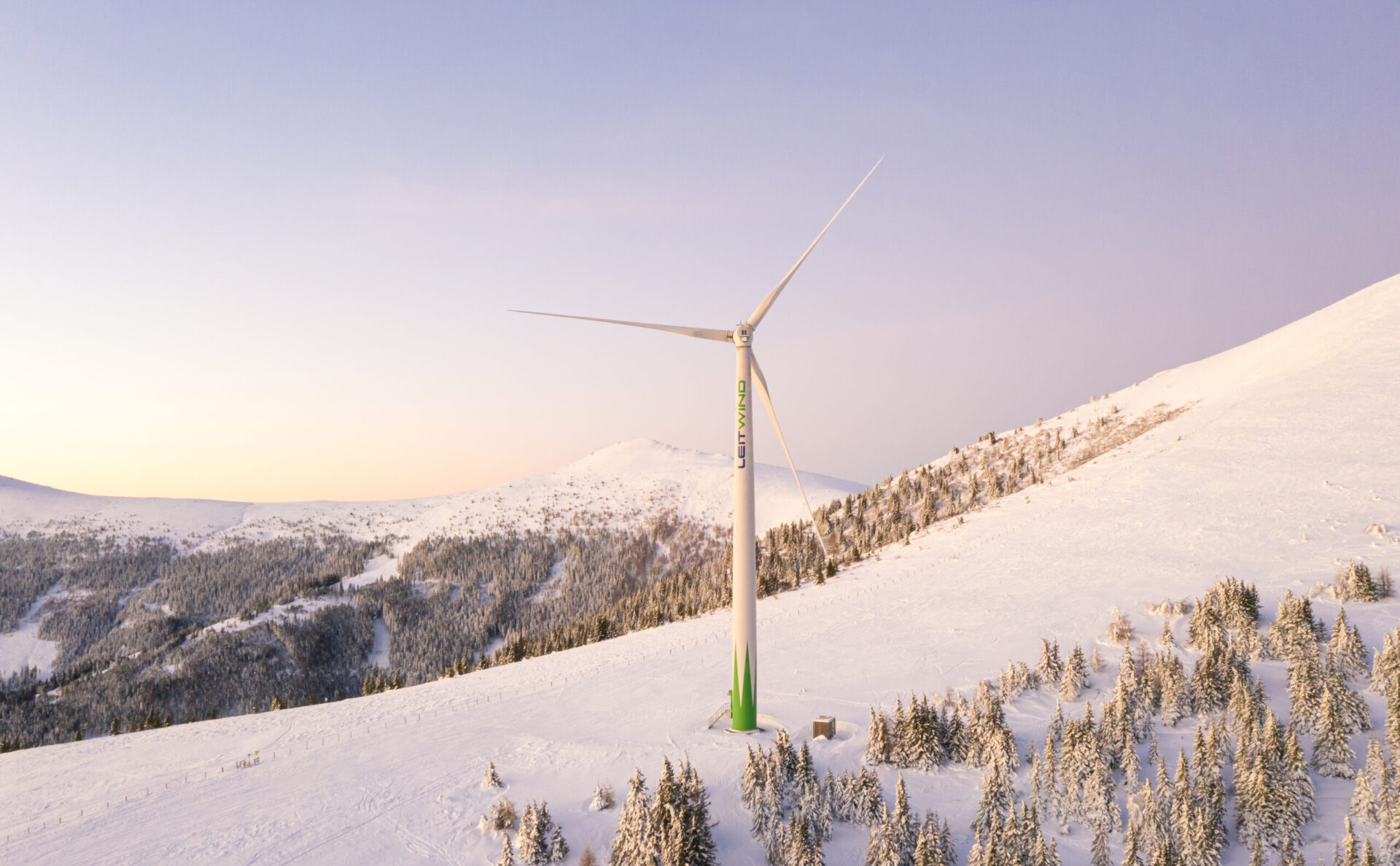
Wind power can support electricity generation for mountain tourism applications, including ski resorts and related infrastructure. Depending on the project configuration, generated electricity can be used on-site through self-consumption schemes.
Electricity can be generated close to the point of use, for example to support energy-intensive applications such as snow-making systems. Existing infrastructure in mountain areas may also facilitate the integration of wind energy projects, subject to site-specific technical and regulatory assessments.
The compact, modular design of wind turbines simplifies transport and installation, and their reduced size ensures the mountain landscape remains unchanged.
A wind farm can silently and efficiently generate the electricity required for lifts, the snow-making systems, hospitality facilities and catering services using the DirectDrive generator.
Depending on site conditions, energy demand profiles and market circumstances, wind energy projects can support local electricity generation and contribute to long-term energy planning.
CASE STUDY
CONSUMPTION OF A TYPICAL SKI RESORT
Ski resort
Ski resort
Consumption
Total consumption
6 x gondola lift GD10
735 MWh/year x 6
4,410 MWh/year
3 x chair lift CD6C
546 MWh/year x 3
1,638 MWh/year
200 snow makers
200 x 24 kW x 200 h
960 MWh/year
1x HUSKY eMOTION
65 kW x 3h x 30 days x 5 months
29 MWh/year
Total consumption: 7,044 MWh/year
LTW42
250 kW (750 MWh/year) =
approx. 50% total energy consumption
Total consumption 1 GD10 + 1 CD6C snow makers + 1 HUSKY eMOTION
LTW80
1.65 MW (3.839 MWh/year) =
approx. 50% total energy consumption
Total consumption 3 GD10 + 1 CD6C snow makers + 1 HUSKY eMOTION
LTW90
1.0 MW (3.781 MWh/year) =
approx. 50% total energy consumption
Total consumption 3 GD10 + 1 CD6C +
200 snow makers + 1 HUSKY eMOTION
CABLEWAY ENERGY CONSUMPTION (GD10)
CABLEWAY ENERGY CONSUMPTION (CD6C)
HUSKY eMOTION ENERGY CONSUMPTION
TITAN 4.0 ENERGY CONSUMPTION
CABLEWAY ENERGY CONSUMPTION (GD10)
GD10 CHARACTERISTICS
- Average carrying capacity 2.000 P/h
- Average elevation gain: 280 m
- Length: 1.300 m
- Average electrical power: 350 kW(with vehicles loaded at 50%)
- Winter season: 1.000 h
- Winter and summer season: 2.100 h
- Winter consumption: 350.000 kWh
- Winter and summer consumption: 735.000 kWh
POWER LTW42 - 250 KW
Annual energy production
Wind speed
Gaep*
4,5 m/s
492 MWh
5,0 m/s
622 MWh
5,5 m/s
750 MWh
6,0 m/s
872 MWh
6,5 m/s
995 MWh
7,0 m/s
1088 MWh
7,5 m/s
1181 MWh
* GAEP: Gross Annual Energy Production
CABLEWAY ENERGY CONSUMPTION (CD6C)
CD6C CHARACTERISTICS
- Average carrying capacity 2.200 P/h
- Average elevation gain: 200 m
- Length: 850 m
- Average electrical power:260 kW (with vehicles loaded to 50%)
- Winter season: 1.000 h
- Winter and summer season: 2.100 h
- Winter consumption: 260.000 kWh
- Winter and summer consumption: 546.000 kWh
POWER LTW42 - 250 KW
Annual energy production
Wind speed
Gaep*
4,5 m/s
492 MWh
5,0 m/s
622 MWh
5,5 m/s
750 MWh
6,0 m/s
872 MWh
6,5 m/s
995 MWh
7,0 m/s
1088 MWh
7,5 m/s
1181 MWh
* GAEP: Gross Annual Energy Production
HUSKY eMOTION ENERGY CONSUMPTION
HUSKY Emotion CHARACTERISTICS
- Operating time: up to 3 hours
- Load power (kW): up to 22 (AC), up to 100 (DC)
- HUSKY eMOTION in use / ski resort: 1
- Average energy/work hour consumption: 60 kW
- Average electricity consumption during winter: 27 MWh
POWER LTW42 - 250 KW
Annual energy production
Wind speed
Gaep*
4,5 m/s
492 MWh
5,0 m/s
622 MWh
5,5 m/s
750 MWh
6,0 m/s
872 MWh
6,5 m/s
995 MWh
7,0 m/s
1088 MWh
7,5 m/s
1181 MWh
* GAEP: Gross Annual Energy Production
TITAN 4.0 ENERGY CONSUMPTION
TITAN 4.0 CHARACTERISTICS
- Average piste length: 4.400 m
- Average distance between snow generators: 200 m
- Average work hours per winter season: 200 hours
- Total number of DemacLenko snow generators considered: 200
- Snow generator average consumption: 24 kWh
- Average energy consumption in the winter season: 960 MWh
POWER LTW42 - 250 kW
Annual energy production
Wind speed
Gaep*
4,5 m/s
492 MWh
5,0 m/s
622 MWh
5,5 m/s
750 MWh
6,0 m/s
872 MWh
6,5 m/s
995 MWh
7,0 m/s
1088 MWh
7,5 m/s
1181 MWh
* GAEP: Gross Annual Energy Production
SUITABLE LEITWIND PRODUCTS TO POWER SKI RESORT SOLUTIONS

 Support and Maintenance
 Contacts




 Model
Model Rotor diameter
 Rated power
  Tower height


 +39 0472 722111
  info@leitwind.com


